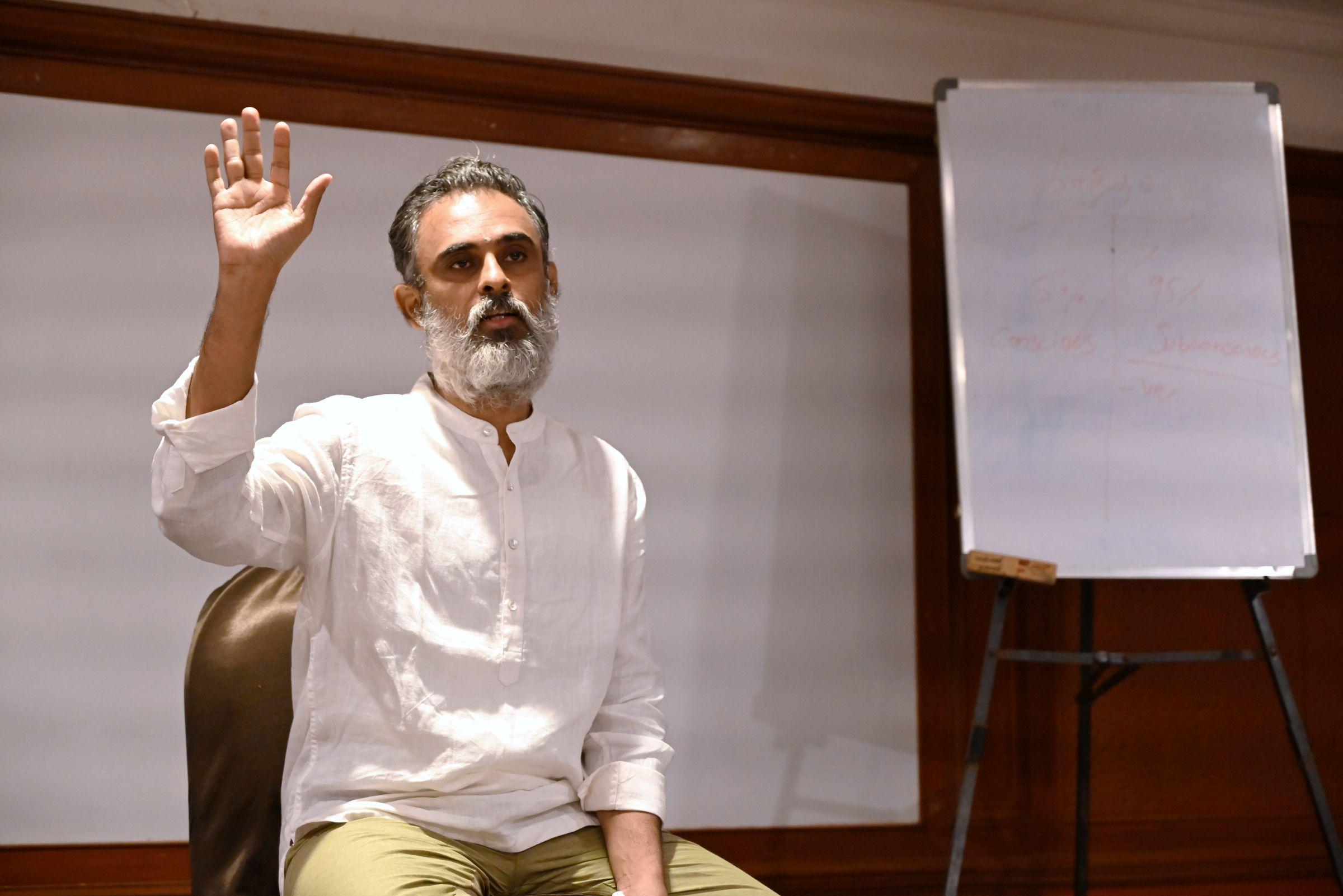
Thiru. Raguram, seated before a white board, raises one hand as he explains a practice.
Courses

Find the practice that suits you

உங்களுக்கான பயிற்சி

From slow and grounding to strong and flowing. Hatha Foundations is a gentle first step.

Weekly courses
6
Levels in the path
7
Sessions each week
40+
Years of teaching
12

Programme curriculum

A structured path of classical yoga

படிப்படியான யோகப் பாதை

At Meiyogam, yoga is not a fitness method. It is a classical discipline, rooted in the guru-shishya tradition of the Natha Sampradaya. Each level prepares body, breath and mind before subtler practices begin, and understanding why we practise matters as much as practising well.

Levels
7
Level 0 to Level 6
Duration
5–6 years
A guide: Levels 5–6 are set for each student
Taught in
Tamil & English
Every level
Rooted in
Natha Sampradaya
Hatha Yoga, Ayurveda and Chinese Medicine
  1. Level 03 months

    Foundations of Living

    Preparing the ground before the seed is sown

    The foundation of classical yoga begins with the essentials of daily living. Food, water, breath and sleep are brought into balance, while asana is introduced as a classical discipline rather than mere exercise. Gentle breathing, the Six Healing Sounds and chanting help settle the mind.

    What you will study5
    • The four pillars of life. Food, water, breath and sleep, seen through Ayurveda and everyday experience.
    • Perceiving the asana rightly. What an asana truly is, and how it differs from an exercise or a stretch.
    • Foundational asana sequences. Standing, sitting, prone and supine postures, learned with care for alignment and breath.
    • Breath, sound and meditation. Breath awareness, the Six Healing Sounds and chanting to quieten the mind.
    • Integration. Guided questions and answers, and a gentle process of completing the past.
  2. Level 13 months

    Earth and Integrity

    Building the vessel: from the feet to the breath to the nadi

    Classical yoga practice begins from the ground up with sequences for the feet, the six stages of Nadi Shuddhi, an introduction to shatkarma and Agochari mudra. Alongside these traditional yogic practices, students explore the nadis and the Toltec teaching on keeping one's word.

    What you will study6
    • Sequences for the feet. Restoring sensitivity, balance and grounding from the soles upward.
    • Breath for stretching. Using the exhale, not force, to move gently into deeper postures.
    • Nadis, breath and emotions. Ida, Pingala and Sushumna, and how feelings settle in the breath.
    • Six stages of Nadi Shuddhi. A step-by-step practice for balanced, conscious breathing.
    • Shatkarma and Agochari mudra. One classical cleansing practice, and the nose-tip gaze as a support for meditation.
    • Integrity. A Toltec teaching on keeping one's word, offered as practical enquiry.
  3. Level 23 months

    Spine, Vayu and Authenticity

    The axis of the body, and the courage to live truthfully

    The practice moves to the spine, the axis of the subtle body. Formal pranayama, Boochari mudra, AUM chanting and the five vayus are introduced, with a life study that asks whether you are truly living as yourself.

    What you will study6
    • The four purusharthas. Dharma, Artha, Kama and Moksha as a map for a meaningful life.
    • Sequences for the spine. Forward, backward, side and twisting work, inversions and yoga nidra.
    • Formal pranayama. Inhalation, retention and exhalation, practised safely after two levels of preparation.
    • Boochari mudra and AUM chanting. Resting the gaze in emptiness, and chanting AUM as a meditative discipline.
    • Shatkarma and the five vayus. A further cleansing practice, and the study of Prana, Apana, Samana, Udana and Vyana.
    • Authenticity. Telling the conditioned self apart from the one truly living.
  4. Level 312 months

    Prana, Spirit and Responsibility

    Entering the subtle body, and mature human agency

    A year of patient work with the subtle body: the Udhara Series, Chi Gong, Nauli kriya and four meditation practices, guided by the Five Spirits of Chinese Medicine and a study of responsibility as the capacity to respond.

    What you will study6
    • The Five Spirits (Wu Shen). Shen, Hun, Po, Yi and Zhi: how consciousness lives in the body, from Chinese Medicine.
    • Udhara Series and Chi Gong. Abdominal work for the digestive fire, and flowing movement-breath sequences.
    • Breath for practice. Mishra Gathi (mixed-ratio breathing) and slow diaphragmatic breathing.
    • Nauli kriya. A powerful abdominal cleansing practice, learned in careful stages.
    • Four meditations. Inner silence (Antar Mouna), visualisation, the Inner Smile, and Nadi Shuddhi with AUM.
    • Responsibility. The capacity to respond consciously, rather than from habit.
  5. Level 418 to 24 months

    The Chakra Sadhana

    Working directly with the energy centres

    Each of the seven principal chakras receives three to four months of dedicated practice through traditional yoga practices, including asana, pranayama, bandha, mudra and mantra. The approach is rooted in classical Hatha Yoga and Tantric texts, rather than popular wellness culture.

    What you will study4
    • Seven chakras, one at a time. Three to four months of dedicated practice for each centre, in ascending order.
    • An integrated practice. Asana, pranayama, bandha, mudra and bija mantra for each chakra.
    • Self-observation. Learning to recognise imbalance and awakening in each centre.
    • Rooted in the classical texts. Hatha and Tantric sources, not popular wellness ideas. Changes are quiet, deep and lasting.
  6. Level 5To be determined

    Kriya Yoga of the Natha Sampradaya

    Initiation-based transmission within the lineage

    Kriya Yoga, as preserved and transmitted through the Natha Sampradaya lineage, is imparted through dheeksha (initiation). These traditional yogic practices are shared within the sacred guru-shishya relationship, with eligibility determined by the āchārya through an individual assessment of each student's readiness and understanding.

    What you will study2
    • Kriya yoga by initiation. Practices shared within the guru-shishya relationship, through dheeksha.
    • Eligibility. Decided by the āchārya's assessment of each student, with no standard timeline.
  7. Level 6To be determined

    Indian Philosophy and Vedanta

    The philosophical ground beneath all practice

    Explore the philosophical foundations that give depth and meaning to classical yoga practice. The study may encompass Samkhya-Yoga, Advaita Vedanta, Kashmir Shaiva philosophy and Tamil Siddha literature, offering a deeper understanding of India's rich philosophical traditions. The complete syllabus will be announced as it is formalised.

    What you will study2
    • Possible areas of study. Samkhya-Yoga, Advaita Vedanta, Kashmir Shaiva philosophy and Tamil Siddha literature.
    • Syllabus in development. The exact curriculum will be announced as it is formalised.

How you progress

Each level is a threshold

குரு–சிஷ்ய முறை

  1. Levels 0–2FoundationAbout 9 months
  2. Level 3Deepening12 months
  3. Level 4Chakra sadhana18 to 24 months
  4. Levels 5–6Advanced transmissionSet for each student

Moving forward is not automatic. The āchārya invites each student to the next level when body, breath and mind are ready. Staying longer at a level is not a setback; it is care.

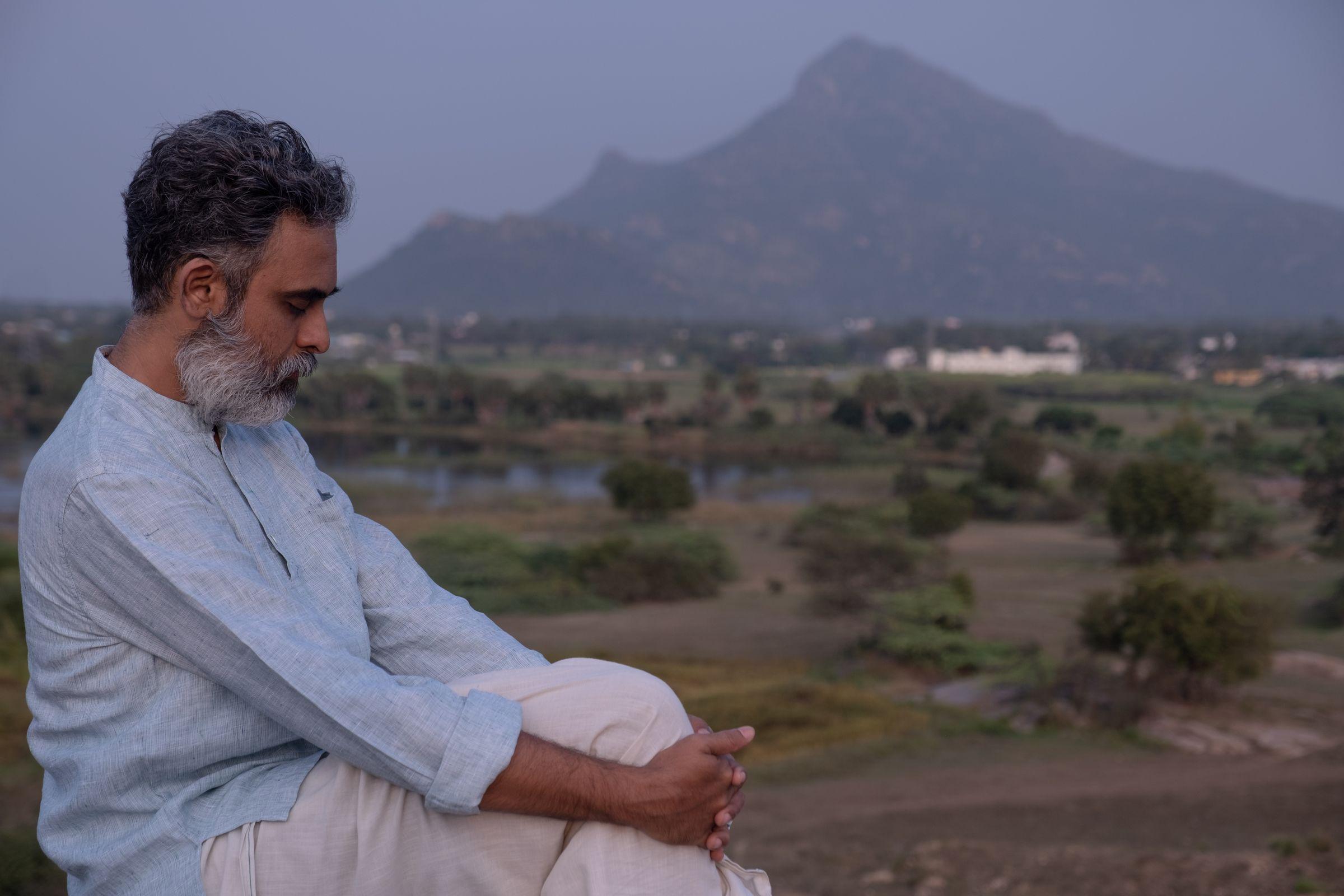
Thiru. Raguram sits on a rock at dusk, head bowed in reflection, a hill rising behind him.

Yoga here begins with a conversation

வாருங்கள், பேசுவோம்

Meet the āchārya in person before you enrol. All enquiries are welcome.