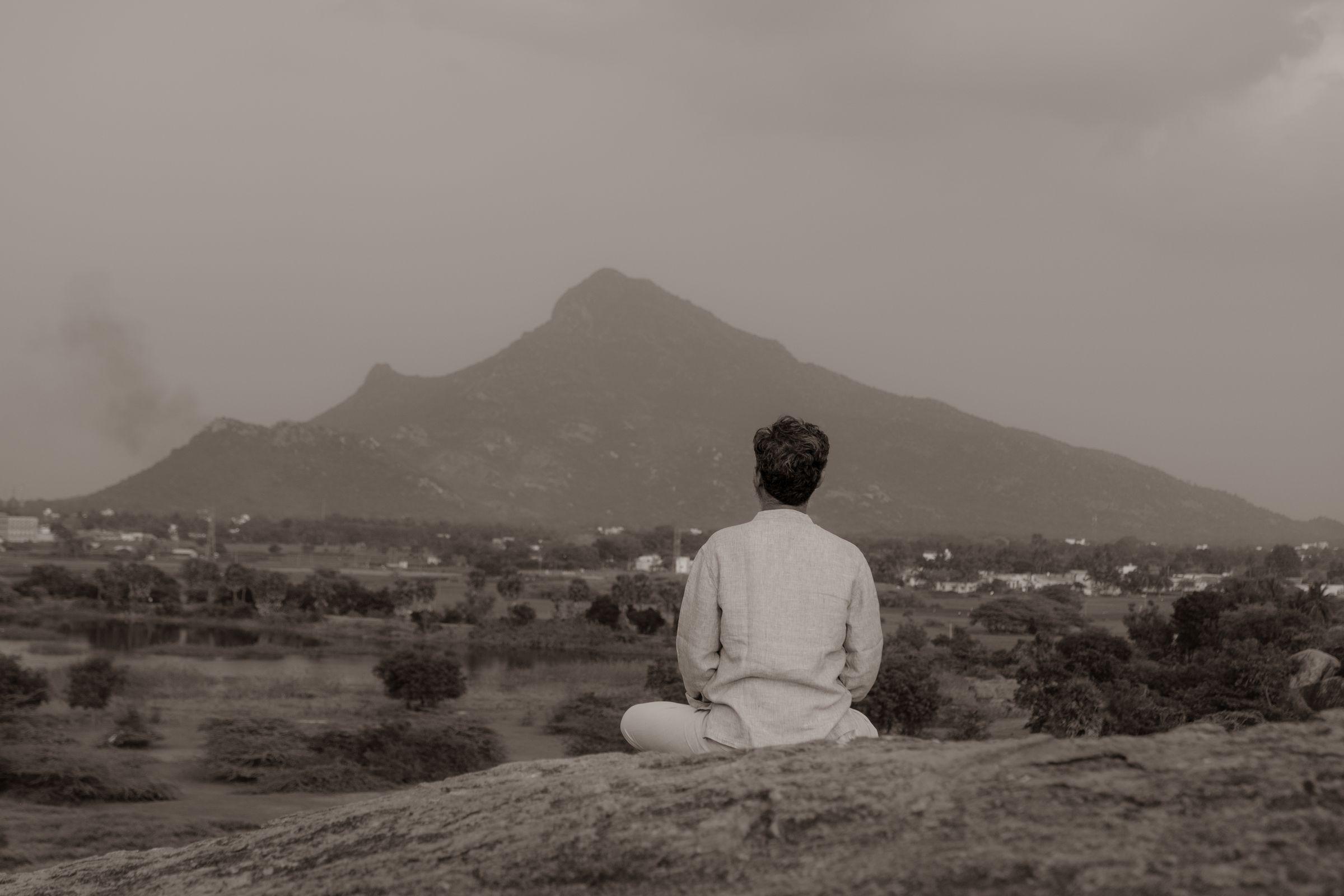
Some verses stay with you for a lifetime. For me, one of them is from the second chapter of the Bhagavad Gita, where Krishna gives Arjuna a definition of yoga that has nothing to do with the body, and everything to do with how we meet life.
The verse
ஸமத்வம் யோக உச்யதே
Evenness of mind is called yoga.
Krishna asks Arjuna to act, and to act well, while remaining steady in success and failure alike. The work is ours to do; the results are not ours to control.
Evenness in daily life
Evenness does not mean not caring. It means doing our best and then letting the outcome be what it will be. A parent, a student or a businessperson can practise this as fully as a monk.
- Give full attention to the task in front of you
- Notice the pull of praise and blame, and let it pass
- Return to the breath when the mind is shaken
Reading further
If this verse speaks to you, the Gita rewards slow reading. Our founder's commentary, Key to the Gita, opens the text as a practitioner's guide, in Tamil.